Key Highlights
- Yen drops to record 179.50 per euro, nearing a nine-month low against the dollar.
- PM Sanae Takaichi urges gradual rate hikes, prioritizing stability and coordination with the BOJ.
- Finance Minister issues verbal intervention amid market volatility.
- Analysts warn yen weakness could force a rate hike sooner than expected.
- Aussie dollar rises on strong jobs data, easing fears of policy cuts.
Introduction
The Japanese yen tumbled to a record low against the euro on Thursday and hovered near a nine-month trough versus the dollar after Prime Minister Sanae Takaichi said she preferred the Bank of Japan (BOJ) to take a cautious approach to interest rate increases.
The move, paired with ongoing government pressure for low rates, sent ripples through global currency markets already reacting to the end of the U.S. government shutdown and a wave of pending economic data releases.
Record Yen Weakness Sparks Concern
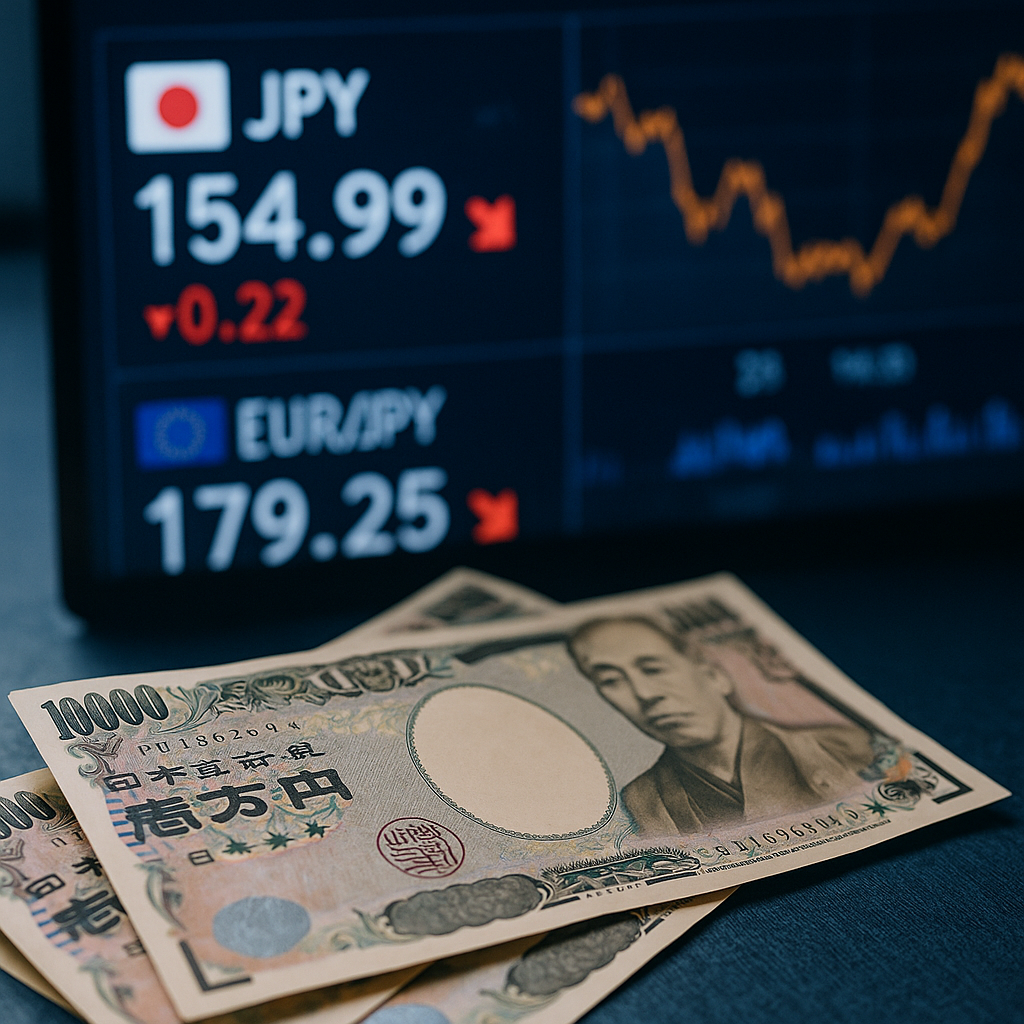
In early Asian trading, the yen touched 179.50 per euro before slightly recovering to 179.25.
Against the dollar, the Japanese currency slipped to 155.02, barely above Wednesday’s nine-month low of 155.05.
Despite Finance Minister Satsuki Katayama’s verbal warnings about “one-sided and rapid movements” in the foreign exchange market, investors continued to sell yen amid doubts that Tokyo will intervene meaningfully.
Economists say the weak yen poses political risks for Takaichi’s new administration. “The exchange rate is crucial to the survival of the administration,” noted Norihiro Yamaguchi, an economist at Oxford Economics. “To mitigate yen weakness, the government must eventually accept the BOJ’s rate hikes.”
Government Seeks Coordination with BOJ
Prime Minister Sanae Takaichi has asked the BOJ Governor Kazuo Ueda to report regularly to the Council on Economic and Fiscal Policy, signaling a hands-on approach to monetary coordination.
While Japan’s ultra-loose policy has supported exporters, it has also intensified import costs and stoked inflation pressures.
Market participants now assign a 46% probability of a BOJ rate hike by January 2026, up from 24% a month earlier.
Analysts say if the yen continues to weaken, the BOJ may be forced to raise rates earlier than anticipated to restore market confidence.
Global Market Outlook: Volatility Returns
Currency volatility is expected to remain elevated as the U.S. releases delayed economic data following the end of its record-long government shutdown.
The uncertainty surrounding inflation and wage reports has added to the nervousness in global markets already rattled by yen weakness and changing rate expectations.
The euro held steady at $1.1590, while sterling slipped 0.1% to $1.3123 ahead of U.K. GDP figures.
Across the board, traders are positioning cautiously, with Japan’s policy direction now emerging as a key driver of sentiment in Asia-Pacific currencies.
Conclusion
The yen’s sharp decline underscores the delicate balancing act facing Japan’s new leadership.
Prime Minister Sanae Takaichi’s call for gradual rate normalization has reassured businesses but alarmed currency markets, where investors are demanding faster policy action to defend the yen’s value.
With global data releases and renewed volatility ahead, Japan’s monetary path could determine not only the fate of its currency but also the broader stability of the Asian foreign exchange landscape.