KEY HIGHLIGHTS
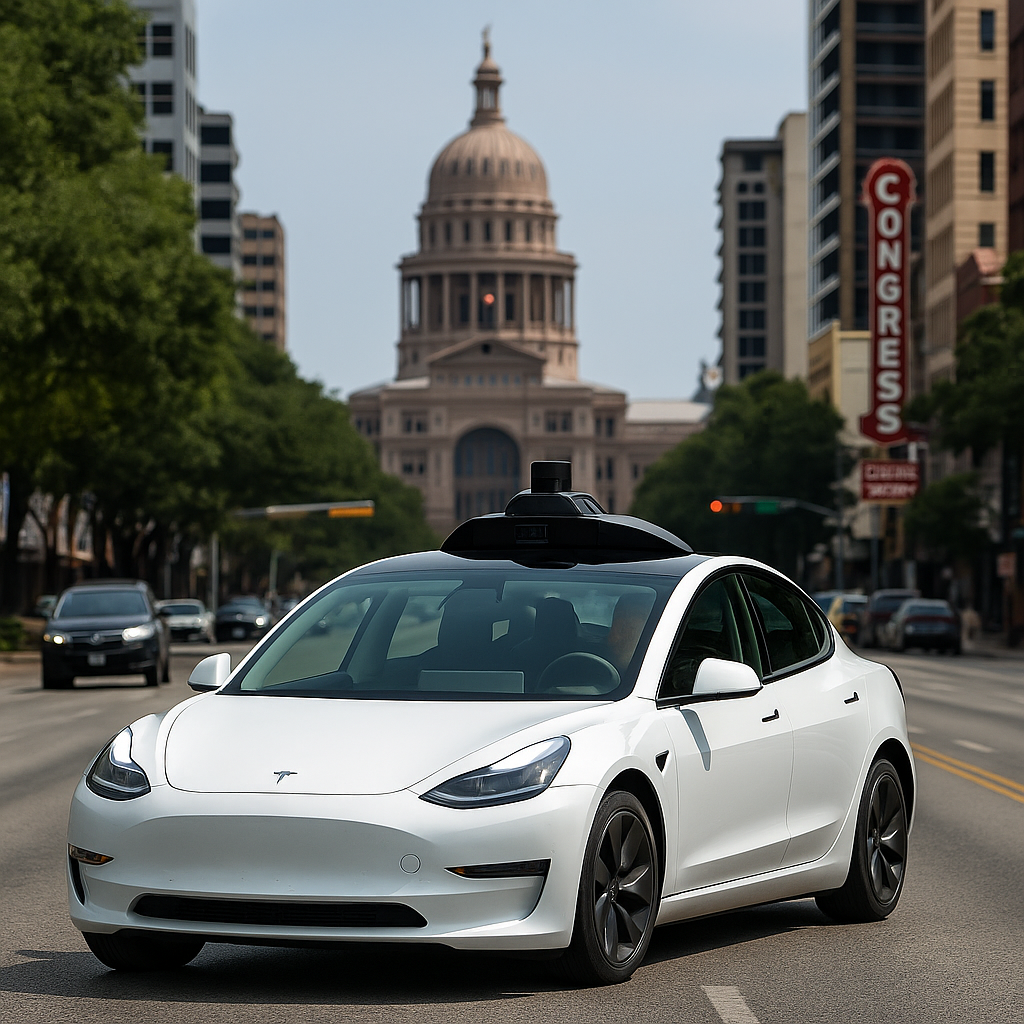
- Tesla CEO Elon Musk says Austin’s robotaxi fleet will double in December 2025.
- Tesla’s robotaxis currently operate in Austin and the San Francisco Bay Area, with safety monitors still required.
- Tesla received approval to operate a ride-hailing service in Arizona.
- Musk maintains robotaxis will expand to 8–10 metropolitan areas by year-end.
- Industry competition heating up with Waymo and Zoox accelerating expansion.
Tesla CEO Elon Musk announced that the company will double the size of its robotaxi fleet in Austin, Texas, in December, continuing the rapid rollout of its autonomous ride-hailing service. The expansion follows Tesla’s initial launch of robotaxis in Austin earlier this year, marking one of the company’s most aggressive pushes into self-driving mobility.
The announcement was made through Musk’s post on X, the social media platform he owns. While Tesla has not disclosed the exact number of robotaxis currently operating in Austin, the expansion signals confidence in the company’s progress toward large-scale autonomous deployment.
Growing Robotaxi Footprint Across the U.S. Introduction
Tesla’s robotaxi service is currently active in Austin and the San Francisco Bay Area, where vehicles still require onboard safety monitors. The company also recently received regulatory approval to launch a ride-hailing service in Arizona, suggesting it may soon announce additional markets.
Musk has repeatedly emphasized his goal of having robotaxis operating without safety drivers in much of Austin by the end of the year. He has also projected active robotaxi operations in eight to ten major metropolitan areas by year-end, and coverage for half of the U.S. population.
Industry Rebound After Years of Setbacks
The robotaxi industry faced years of setbacks due to regulatory scrutiny, high development costs, and safety concerns. However, 2025 has marked a significant rebound. Tesla, alongside competitors Waymo (Alphabet) and Zoox (Amazon), is accelerating deployment at an unprecedented pace.
Regulators have intensified oversight following high-profile failures from earlier autonomous vehicle startups, but major technology and automotive companies continue to invest heavily in the sector.
Tesla’s Position in the Robotaxi Race
While Tesla’s Full Self-Driving software remains under regulatory review, the company has maintained that its vertically integrated system gives it a measurable advantage in scaling autonomous fleets. Musk has consistently framed robotaxis as central to Tesla’s long-term growth and valuation.
Still, analysts note that:
- Tesla must demonstrate reliable, safe, and fully autonomous operations without safety drivers
- Regulatory approvals vary widely across U.S. states
- Waymo currently leads in fully driverless commercial service
Even so, the doubling of Austin’s fleet marks a tangible acceleration in Tesla’s ambitions.
What Comes Next
The U.S. robotaxi landscape may look dramatically different by early 2026 if Tesla’s expansion targets hold. With Musk pushing for wider deployment and regulatory progress underway in multiple states, the next few months will serve as a major test for Tesla’s self-driving strategy.
As competition intensifies, the race between Tesla, Waymo, and Zoox is emerging as one of the most important technological battles of the decade.