Key Highlights
- Japan named food tech a national strategic priority in 2025
- Cacao-free chocolate addresses soaring global cacao prices
- Cultured meat and fungal protein aim to cut emissions and costs
- Climate change drives shortages in cacao, coffee, and oranges
- Startups and major retailers now push alternative foods
Introduction
Japan is rethinking how food is made. As prices rise and supplies tighten, the country is turning to food tech for answers. By combining biotechnology, artificial intelligence, and advanced manufacturing, Japan aims to protect consumers while building new growth industries.
In 2025, the government formally designated food tech as a national strategic area. Since then, momentum has accelerated.
The Cacao Crisis Sparks Innovation in Japan
Chocolate prices in Japan have surged. Between 2021 and 2025, the price of a single chocolate bar nearly doubled. While transportation and labor costs played a role, the real driver was the global cacao crisis.
West Africa supplies about two-thirds of the world’s cacao. However, abnormal weather, disease, land issues, and speculation have crushed harvests. As a result, global supply has become unstable.
Climate change has worsened the problem. Extreme heat and rainfall now threaten long-term cacao production.
Aeon Introduces Cacao-Free Chocolate to Japan
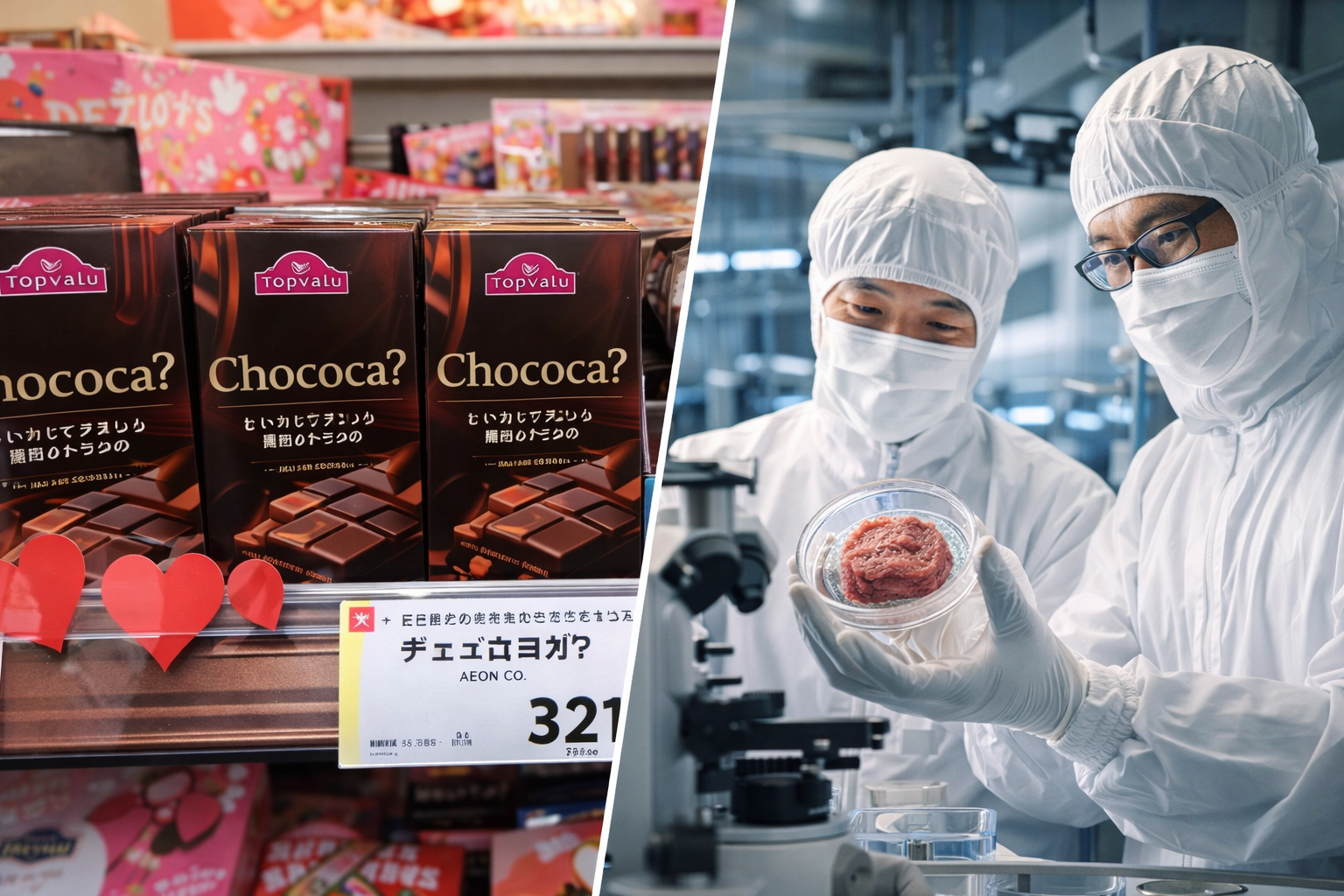
In response, Aeon Co. launched a new alternative. Its private brand introduced “Chococa?”, a chocolate-like product made without cacao.
Instead of cacao beans, it uses sunflower seeds. The substitute, called ChoViva, comes from Planet A Foods. It delivers the same taste and texture while avoiding tropical deforestation.
Because sunflowers grow closer to Japan, transportation emissions also fall. Supply becomes more stable. Prices stay competitive. As a result, consumers gain a new option without sacrificing flavor.
Food Tech Goes Beyond Chocolate
Chocolate is only the beginning. Across Japan, startups are developing new protein sources.
In Ibaraki Prefecture, Koji Labo produces “fungal meat” by cultivating koji mold. This method cuts water use and carbon emissions. It also upcycles sake and shochu waste into food.
Meanwhile, researchers push forward on cultured meat. These products grow animal cells instead of raising livestock. The approach reduces emissions and land use.
Cultured Meat Research Gains Speed
A consortium including University of Osaka and Shimadzu Corp. plans to commercialize cultured beef by 2031.
Elsewhere, scientists at the Tokyo Metropolitan Industrial Technology Research Institute and Kitasato University have developed fat-producing cells from Japanese eel tissue. These cells could recreate eel flavor without fishing pressure.
Although the technology remains early, progress continues.
Why Japan Is Moving Now
Japan faces structural food risks. Climate change threatens imports. Global supply chains remain fragile. At the same time, an aging population raises food security concerns.
Food tech offers resilience. It reduces dependence on volatile commodities. It also creates exportable technology.
Therefore, the government backs the sector as both a defensive and growth strategy.
Challenges Still Lie Ahead
Despite progress, hurdles remain. New foods must earn consumer trust. Regulations must adapt. Costs must fall.
However, Japan’s track record in precision manufacturing and biotech gives it an edge. With patience and scale, food tech could move from niche to mainstream.
Conclusion
From cacao-free chocolate to cultured eel, Japan is redefining how food reaches the table. Food tech now sits at the center of that transformation.
As climate risks rise and prices stay high, these innovations may prove essential—not optional.