Key Highlights
- Oil prices surged after the US announced a shipping blockade against Iranian ports in the Strait of Hormuz.
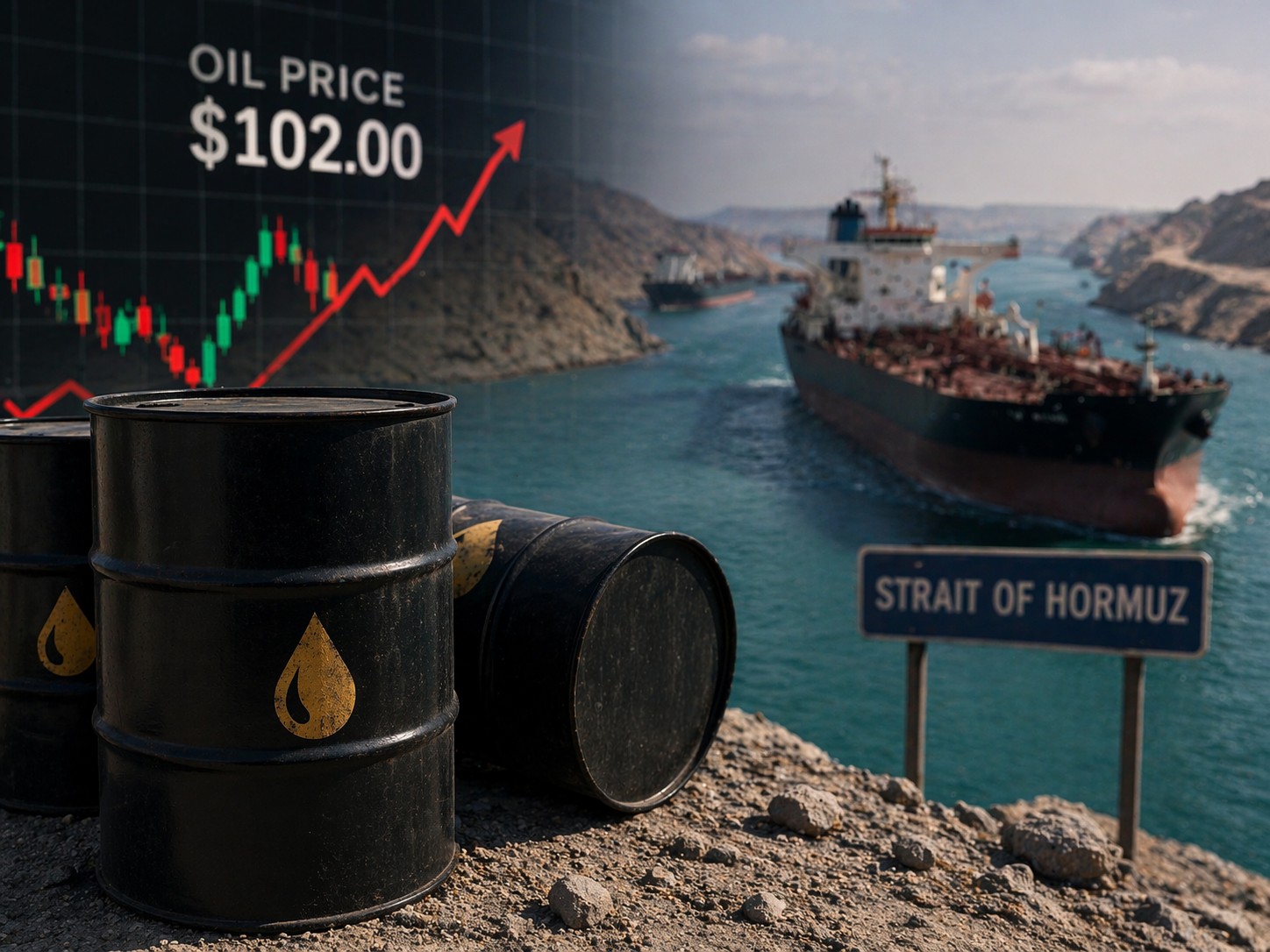
- Brent crude rose 7% to $102 a barrel, while WTI climbed 7.8% to $104.
- US Central Command said naval forces would begin the blockade at 10 a.m. ET.
- The move could tighten global supply further and increase pressure on markets and consumers.
- Iran accounts for roughly 4% of world oil supply, much of which goes to China.
Introduction
Oil prices opened the week with a sharp jump after the United States said it would begin a shipping blockade against Iranian ports in the Strait of Hormuz. The announcement pushed both major crude benchmarks above $100 a barrel and revived fears of deeper disruption in global energy markets. Investors now face a more dangerous mix of military escalation, tighter supply, and rising economic risk.
Oil Prices Surge After US Blockade Announcement
Brent crude climbed 7% to $102 a barrel, marking a gain of 40% since the war began. West Texas Intermediate rose even more sharply, jumping 7.8% to $104 a barrel, more than 50% above its prewar level. The move reflected immediate concern that the latest US action could choke off more supply from one of the world’s most sensitive oil corridors.
Oil traders reacted quickly because the Strait of Hormuz remains one of the most important routes for global energy flows. Any new restriction in or around the waterway can move prices fast, especially when tensions already run high.
What the US Said It Will Do
US Central Command said naval forces would begin a blockade of all maritime traffic entering and exiting Iranian ports starting Monday at 10 a.m. ET. At the same time, it said its forces would not block freedom of navigation for ships traveling through the Strait of Hormuz to and from non-Iranian ports.
That distinction matters, but it does not eliminate the risk. Markets still see the blockade as a major escalation because it directly targets Iranian oil flows and raises the odds of a broader confrontation at sea.
Why the Strait of Hormuz Matters So Much
The Strait of Hormuz sits at the center of the global oil system. When conflict disrupts traffic there, prices tend to spike because the market immediately starts pricing in tighter supply, delivery delays, and a greater risk of military escalation.
The latest blockade threat comes after the United States and Iran failed to reach an agreement to end the war during weekend talks. Iran has reportedly charged some ships seeking transit through the strait, and Tehran has vowed retaliation against any military vessels in the area.
That standoff creates a more fragile environment for shipping, energy flows, and diplomatic stability all at once.
Global Supply Could Tighten Even More
The new US move could tighten global oil markets further because Iran still plays a meaningful role in world supply. According to the information provided, Iran accounts for roughly 4% of global oil production, and much of that output goes to China.
The stakes rise even further because Iran has exported more oil since the war started. Its exports averaged about 1.85 million barrels a day through March, roughly 100,000 barrels a day above the average between December and February.
If the blockade disrupts those flows, buyers will have to compete harder for replacement barrels. That competition could keep prices elevated and spread higher costs through transportation, manufacturing, and consumer spending.
Markets React to Rising Geopolitical Risk
Stock markets showed early signs of stress as the oil shock hit. Futures for the S&P 500, Dow, and Nasdaq pointed to a weaker open, while most major Asian indexes closed modestly lower and leading European indexes also traded down.
That reaction makes sense. Higher oil prices often hurt sentiment because they raise input costs, add inflation pressure, and create uncertainty for businesses and households. When traders see military escalation near a core shipping corridor, they usually move quickly to price in wider economic damage.
Why This Could Hurt Consumers
Higher oil prices rarely stay confined to the commodities market. They usually filter into gasoline, freight, airline tickets, and a long list of everyday goods. Iranian officials have already signaled that Americans could soon feel the effect at the pump, and that warning fits the broader market logic behind the price surge.
If oil remains above $100 for long, consumers will likely face higher energy bills and rising inflation pressure. That could also complicate the outlook for central banks and economic growth.
Conclusion
The latest jump in oil prices reflects more than a market reaction to headlines. It signals rising fear that the conflict around Iran and the Strait of Hormuz could tighten global supply even further and create a new wave of economic pressure. Brent and WTI have already pushed above $100, and markets now have to weigh the risk of a prolonged blockade, retaliation from Tehran, and additional strain on global trade. If tensions continue to rise, oil may stay elevated and keep the world economy under pressure.