Key Highlights
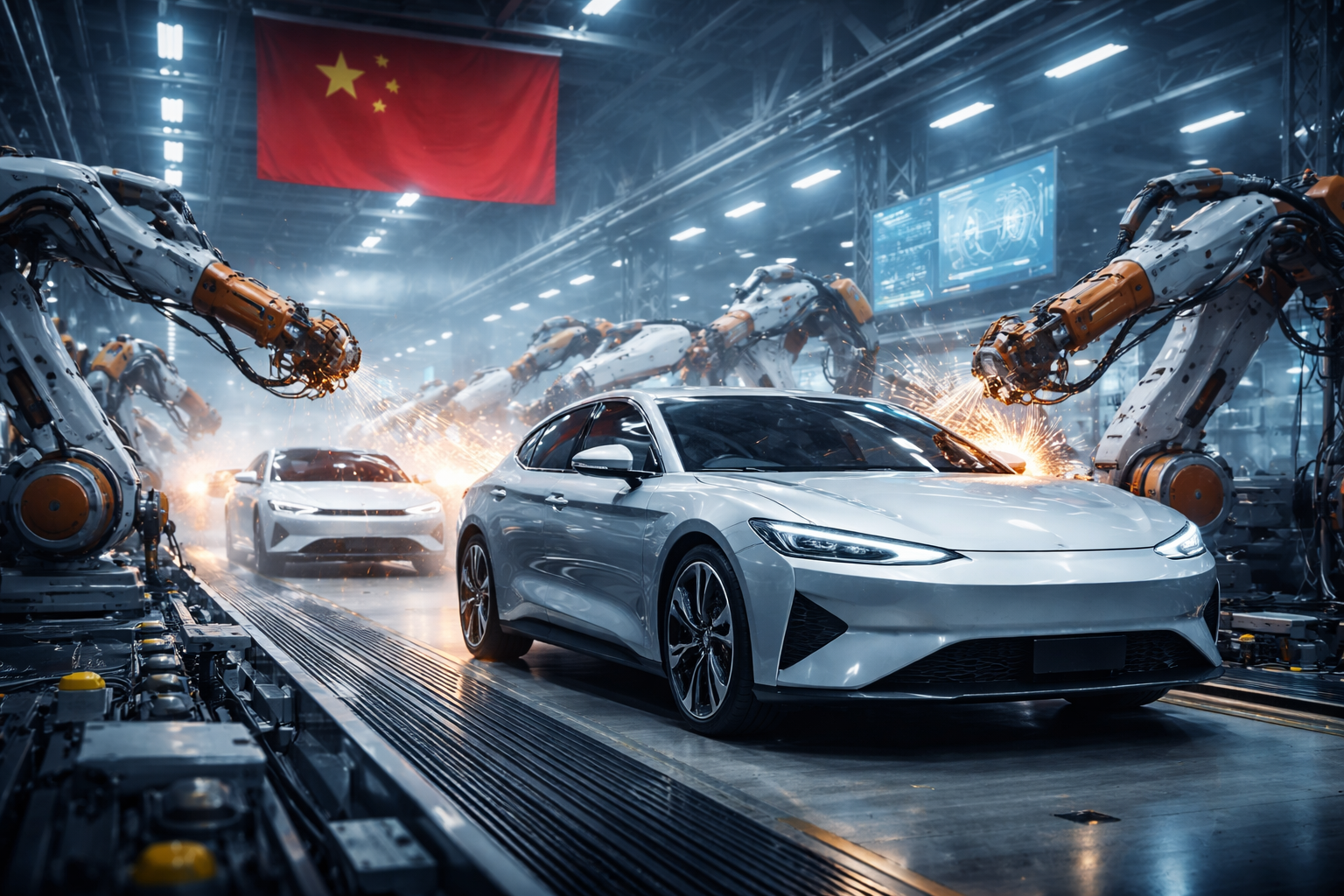
- China’s auto industry is reshaping global car manufacturing.
- Automakers around the world now face pressure to match “China Speed.”
- Chinese manufacturers are moving faster through shorter development cycles.
- Software-first design has become a core part of the new model.
- Cost compression is increasing pressure on global competitors.
- Executives from Detroit to Wolfsburg are watching China’s approach closely.
Introduction
China’s automotive industry is transforming the way cars are designed, developed, and produced around the world. As competition intensifies, manufacturers across Europe and the United States are facing growing pressure to match what industry leaders now call “China Speed.” This shift goes far beyond lower prices. Instead, it reflects a broader manufacturing model built on faster development cycles, software-first thinking, and aggressive cost control. As a result, China is no longer just a major car market. It is now setting the tempo for the global auto industry.
What “China Speed” Means for the Auto Industry
“China Speed” refers to a new pace of automotive development that is forcing global carmakers to rethink their strategies. Chinese manufacturers are accelerating product cycles and bringing new vehicles to market much faster than many traditional rivals.
This faster tempo matters because the auto industry no longer competes only on engineering heritage or scale. Today, speed has become a strategic advantage. Companies that can design, test, and launch vehicles more quickly can adapt faster to consumer demand, technology shifts, and pricing pressure.
Therefore, automakers from Detroit to Wolfsburg are now studying China’s model with far greater urgency.
China’s Car Industry Is Moving Beyond Traditional Manufacturing
China’s rise in the automotive sector reflects more than production volume. The country is also changing the structure of vehicle development itself. Chinese automakers are increasingly relying on software-first design, which means they build vehicles around digital systems, connectivity, and user-facing technology from the start.
That approach differs from older manufacturing models that treated software as a secondary feature. Instead, Chinese companies are integrating software deeply into product development, which helps them move faster and update features more efficiently.
Because of that, China’s influence now extends into the very architecture of modern carmaking.
Faster Development Cycles Are Changing Global Competition
One of the biggest advantages in China’s automotive model is speed of execution. Shorter development cycles allow companies to respond faster to market changes and launch updated models on a tighter schedule.
This puts pressure on global automakers that still operate with longer planning horizons and more layered decision-making. In a market that increasingly rewards agility, slower product timelines can become a major disadvantage.
Consequently, many established manufacturers now face a difficult challenge. They must preserve quality, safety, and brand identity while also learning how to move much faster.
Software-First Design Is Becoming the New Industry Standard
Software-first design has become central to China’s growing influence in the auto sector. Vehicles now compete not only on performance and styling, but also on digital experiences, connectivity, and intelligent systems.
Chinese automakers have embraced this shift quickly. By prioritizing software early in the design process, they can streamline development and deliver features that match changing customer expectations.
Meanwhile, traditional manufacturers must adapt to a market where software updates, interface design, and digital ecosystems matter just as much as hardware. Therefore, China’s model is helping redefine what a modern car company looks like.
Aggressive Cost Compression Raises the Stakes
China’s automotive industry is also pushing competitors through aggressive cost compression. Lower-cost development and production give manufacturers more room to compete on price while still investing in innovation.
This creates another layer of pressure for automakers outside China. They must now find ways to reduce costs without weakening product quality or long-term profitability.
As a result, the global industry is entering a period where speed and efficiency must work together. A company can no longer rely on slow processes and high cost structures in a market shaped by faster, leaner rivals.
Why Global Automakers Are Paying Attention
Executives across major automotive centers are watching China closely because the stakes are now global. What happens in China no longer stays in China. Instead, the country’s manufacturing rhythm is influencing strategic decisions in Europe, the United States, and other major markets.
That is why “China Speed” has become such an important idea. It captures a broader industrial shift in which Chinese manufacturers are not only competing within the market, but also redefining the rules of competition itself.
For global automakers, this means adaptation is no longer optional. It has become necessary.
Conclusion
China’s automotive industry is setting a new global pace through faster development cycles, software-first design, and sharper cost control. This model is forcing automakers around the world to rethink how they design and build vehicles. As competition intensifies, “China Speed” is becoming one of the defining pressures in the global car industry. Companies that adapt quickly may stay competitive. Those that move too slowly may struggle to keep up in a market that now runs on China’s timetable.