Key Highlights
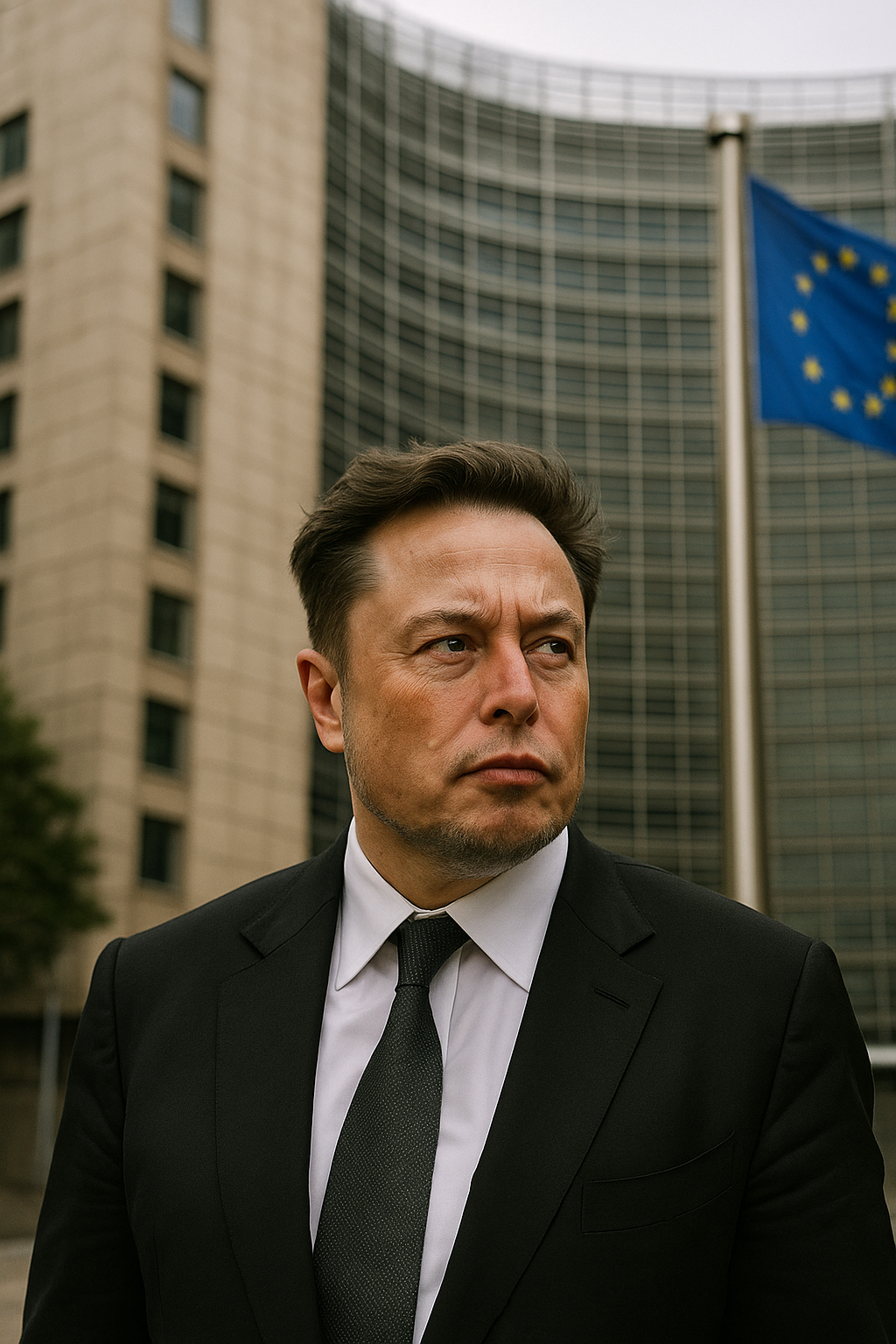
- The EU fines X €120M ($140M) for violations of the Digital Services Act (DSA).
- Offenses include deceptive blue-check design, advertising transparency failures, and refusal to provide researcher data access.
- TikTok avoids penalties by agreeing to remedial concessions.
- The United States criticizes the EU for targeting American tech companies.
- X now has 60 to 90 working days to comply with DSA requirements or face further sanctions.
- DSA fines can escalate to as high as 6% of global annual revenue.
Introduction: A Landmark Clash Between Europe and Big Tech
Europe has issued its first major fine under the Digital Services Act (DSA), slapping Elon Musk’s platform X with a €120 million penalty for multiple transparency and safety violations. The decision caps a two-year investigation and signals the EU’s willingness to act aggressively as global tensions rise over tech governance, platform accountability, and digital speech standards.
While X faces steep regulatory pressure, TikTok avoided a fine through negotiated concessions, underscoring the EU’s increasingly nuanced but firm stance on platform oversight.
EU Outlines Specific DSA Violations by X
According to European regulators, X breached several core DSA obligations intended to protect users and ensure platform accountability. Infractions included:
1. Deceptive Blue Checkmark Design
Authorities argue that X misled users by altering the meaning of the “verified” badge, blurring the line between identity verification and paid status, a change that regulators say compromises platform integrity.
2. Lack of Advertising Transparency
The platform’s advertising repository was deemed insufficient, making it difficult for researchers and consumers to identify political ads or detect scams.
3. Failure to Provide Public Data Access
X repeatedly blocked or restricted researchers attempting to access public-interest data, a violation of DSA rules designed to support academic oversight and counter disinformation.
EU Regulators Defend Penalty: “This Is Not Censorship”
EU tech chief Henna Virkkunen emphasized that the fine is not about controlling speech but enforcing the bloc’s digital safety standards.
“We are not here to impose the highest fines. We are here to make sure our digital legislation is enforced,” Virkkunen said, rejecting claims of censorship.
She confirmed that future decisions on other DSA cases would be delivered far more quickly.
US Officials Respond: Accusations of Anti-American Bias
The fine drew immediate condemnation from U.S. leaders.
Vice President JD Vance posted:
“The EU should be supporting free speech, not attacking American companies.”
This criticism reflects long-standing U.S. concerns that the DSA disproportionately impacts American platforms like X, Meta, and Google.
The European Commission maintains that the legislation applies equally regardless of nationality.
TikTok Avoids Fine but Remains Under Investigation
TikTok escaped financial penalties by offering corrective measures, including improvements to its ad library and greater transparency commitments. However, additional investigations into its algorithms, child protections, and content systems continue.
Ongoing Probes Threaten More Trouble for X
Beyond the fines, X remains under scrutiny for potential failures in:
- combating illegal content
- preventing information manipulation
- meeting child-safety standards
The platform now has 60 to 90 working days to demonstrate compliance, depending on the issue. Failure to do so could result in exponentially higher fines—up to 6% of annual global revenue.
Conclusion: A Defining Moment in Global Tech Regulation
The EU’s €120 million sanction against X is more than a penalty; it is a signal that Europe intends to shape the future of global digital governance. As the DSA enters full enforcement, major platforms must adapt or face escalating consequences.
The decision also deepens geopolitical tensions between Brussels and Washington, setting the stage for a prolonged transatlantic debate over free speech, platform responsibility, and the balance between innovation and regulation.
If X fails to comply, even more severe penalties may follow—potentially reshaping the future of one of the world’s most influential social networks.