KEY HIGHLIGHTS
- Argentina’s fracking epicenter, Añelo, has been transformed by the development of the Vaca Muerta shale oil and gas formation.
- Fracking has brought population growth, economic expansion, and new jobs — but long-term national benefits remain debated.
- Experts warn Vaca Muerta alone cannot solve Argentina’s deep structural problems, despite strong export gains.
- Infrastructure limits, investor uncertainty, environmental backlash, and currency controls continue to slow full development.
- Local workers and businesses are thriving, but remain skeptical that energy wealth will translate into broader national stability.
A Boomtown Emerges in the Desert
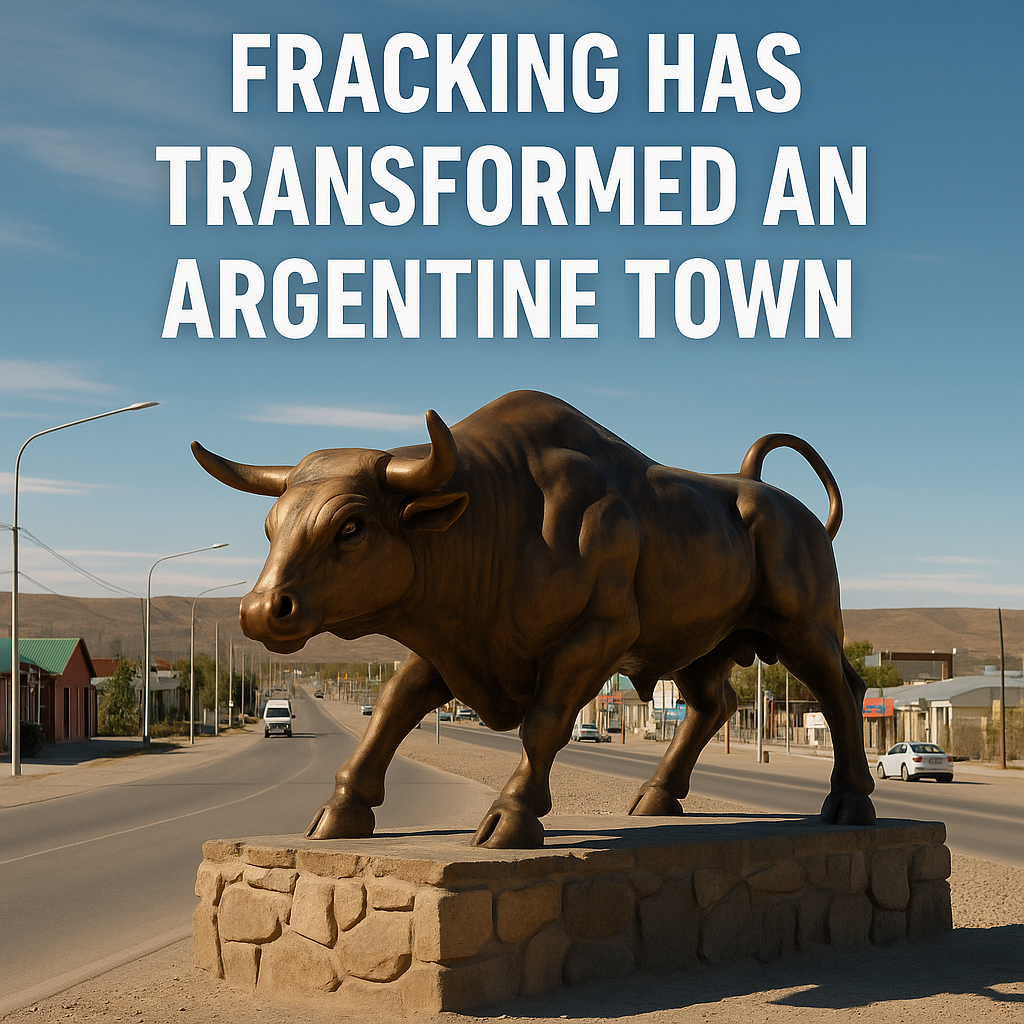
Añelo’s population surged from 10,788 in 2010 to 17,893 in 2022, a jump of more than 60%. Each weekday, an additional 15,000 oil and gas workers enter the town. Roads once nearly empty are now jammed with tankers, heavy machinery, and buses transporting crews.
The economic transformation has been swift:
- Jiménez’s small tire shop, once lucky to see two customers a day, now serves roughly 20 vehicles daily.
- New businesses, hotels, and housing developments have sprung up across the once desolate landscape.
- Traffic in 2024 reached nearly 25,000 vehicles per day, including more than 6,400 trucks.
Añelo hasn’t just grown — it has exploded.
Vaca Muerta: A Resource Decades in the Making
Today the formation is a cornerstone of Argentina’s energy supply:
- 3,358 active wells as of early 2025
- 1,632 oil wells and 1,726 gas wells
- More than half of Argentina’s total oil and gas output
Economist Nicolás Gadano notes that Vaca Muerta’s production costs are significantly lower than those of aging conventional fields elsewhere in the country. With conventional deposits increasingly depleted, fracking has become Argentina’s most competitive energy frontier.
A Lifeline for Argentina’s Fragile Economy
The shale boom has helped Argentina achieve energy self-sufficiency and produce a significant export surplus:
- $6 billion surplus in 2024
- A similar surplus expected for 2025, despite lower global prices due to higher output
This has become vital for a country struggling with decades of:
- high inflation
- recurring sovereign debt defaults
- limited foreign currency reserves
- chronic fiscal instability
Yet experts warn against placing unrealistic hopes on Vaca Muerta.
Prosperity—But Not a Panacea
While Vaca Muerta is now Argentina’s strongest engine for generating U.S. dollars, analysts like Nicolás Gandini caution that:
“There is an overrepresentation of what Vaca Muerta can solve.”
Agriculture, long Argentina’s economic backbone, has stagnated. Mining lags behind. Outside a few sectors, Argentina is struggling to find new sources of sustainable growth.
Even energy investment, despite strong potential, faces hurdles:
1. Currency Controls
For years, companies have been unable to convert profits into foreign currency freely.
Gadano notes this keeps investors hesitant:
“Firms say: ‘We make money, but we’re forced to reinvest it. We can’t take a dollar out.’”
Recent policy changes by the government of President Javier Milei loosen restrictions for individuals, and corporate reforms may be next.
2. Infrastructure Limits
Pipeline shortages, crumbling roads, and the lack of a railway system bottleneck the movement of oil and gas.
3. Environmental Opposition
Local and global environmental groups warn about the ecological risks of fracking.
However, the political consensus around developing Vaca Muerta — shared across all major Argentine parties — has left environmental activists with diminishing influence.
A Town Transformed — A Nation Still Waiting
For Añelo residents like Jiménez, the boom has brought undeniable prosperity. His shop became so busy he opened a second branch — a remarkable leap from the days of servicing just two vehicles.
Still, he remains cautious:
“There will be oil and gas for many years. But that doesn’t mean Argentina won’t continue to have economic and political ups and downs.”
His words capture the paradox of Vaca Muerta: enormous potential, but limited certainty.
Conclusion
Añelo is living proof that fracking has transformed local economies in dramatic, tangible ways. Jobs, infrastructure, and opportunities have multiplied across the region.
But the deeper question remains: Can Vaca Muerta transform Argentina as a whole?
The answer, for now, is mixed.
Vaca Muerta can provide dollars, energy independence, and a foundation for growth — but it cannot single-handedly resolve decades of structural economic challenges.
The shale boom is real.
Its promise is undeniable.
But its long-term impact on Argentina’s future depends not only on geology — but on politics, policy, infrastructure, and global markets.