Key Highlights
- Brent crude climbed to $71.66 per barrel, while US crude rose to $66.43.
- Gold reclaimed the $5,000 per ounce level amid renewed safe-haven demand.
- Rising US–Iran tensions increased fears of supply disruption in the Strait of Hormuz.
- Nearly 20% of global oil supply flows through the strategic waterway.
- Higher oil prices raise inflation risks and complicate central bank policy decisions.
- US stocks declined as investors shifted toward defensive assets.
Oil Prices Surge as Middle East Risks Escalate
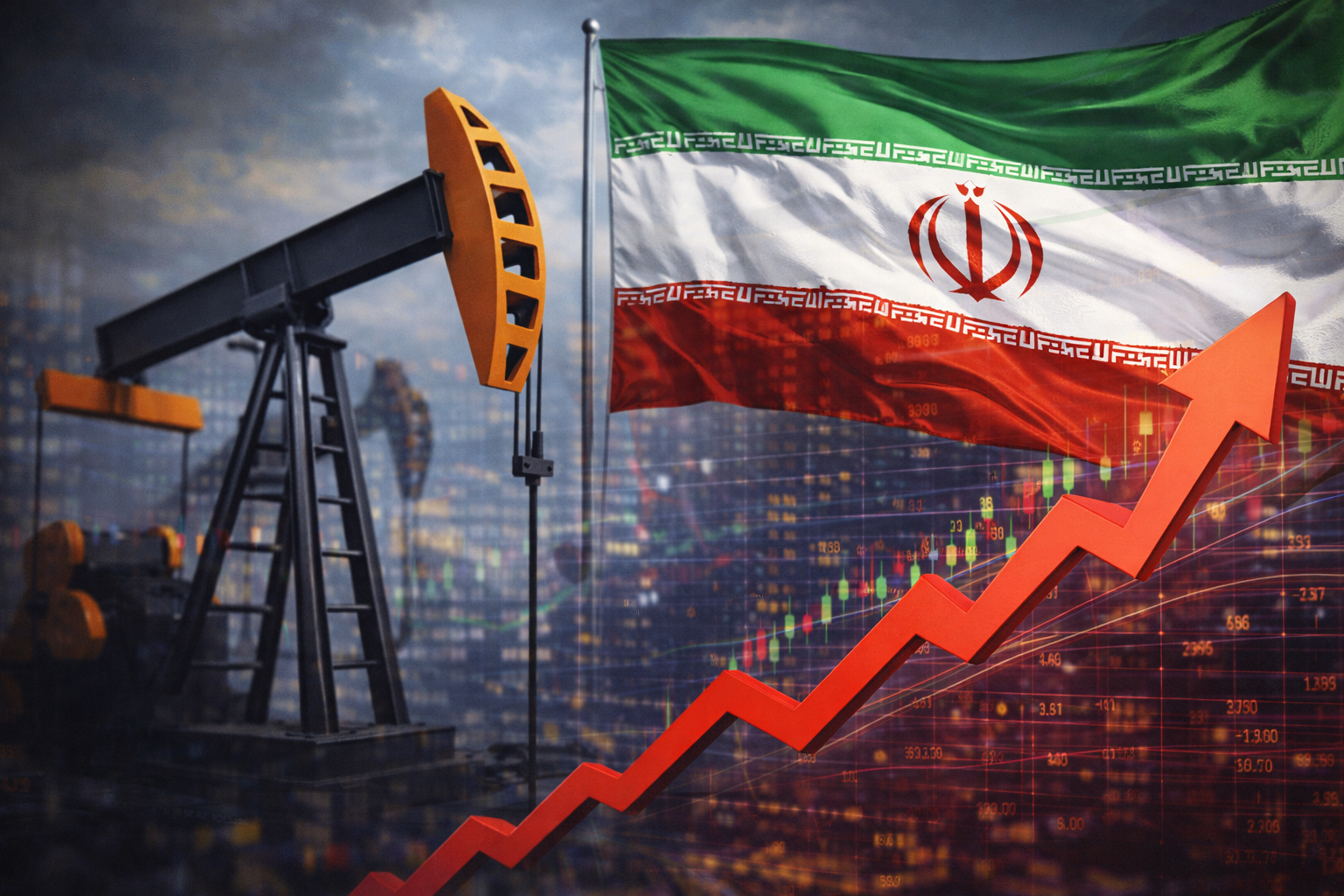
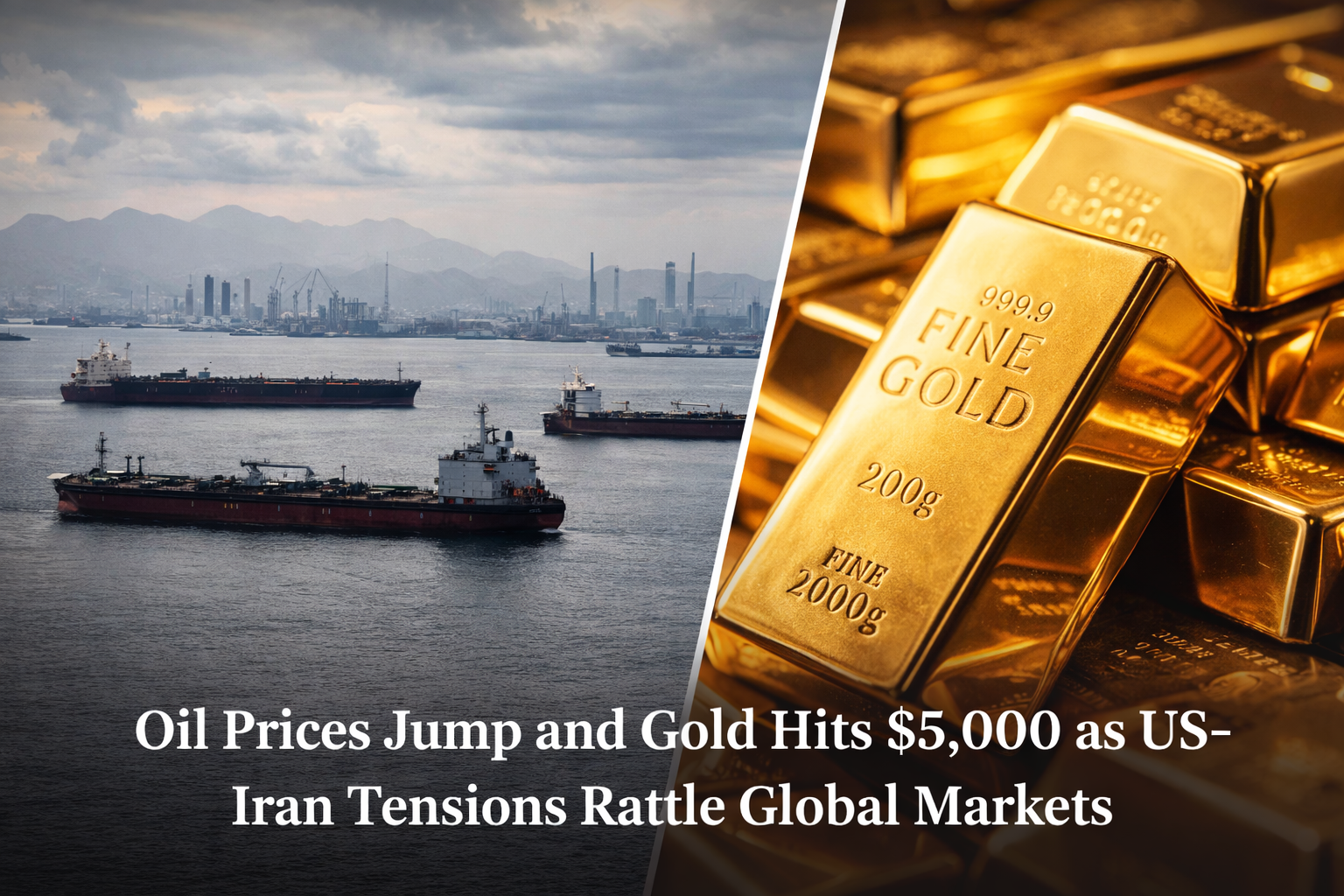
Oil prices climbed to their highest levels in nearly seven months as tensions between the United States and Iran intensified. Investors reacted quickly to geopolitical uncertainty, pushing Brent crude up 1.86% to $71.66 per barrel. Meanwhile, US crude gained 1.9% to $66.43 per barrel.
The rally extended gains from the previous session, when oil jumped more than 4% in its strongest single-day increase since October. Markets now price in a growing geopolitical risk premium as the possibility of disruption to global supply looms larger.
The renewed strain between Washington and Tehran centers on nuclear negotiations. US officials have signaled frustration with Iran’s position, while military assets have moved closer to the Middle East. As a result, energy markets have begun to factor in the risk of supply shocks.
Gold Reclaims $5,000 as Investors Seek Safe Havens
Gold prices surged above $5,000 per troy ounce, reinforcing its role as a traditional safe-haven asset during periods of uncertainty. The metal rose 2% midweek and added further gains as investors sought protection against geopolitical and inflation risks.
Although gold has recently traded with unusual volatility, the escalation in US–Iran tensions triggered a fresh wave of buying. Traders moved capital away from risk assets and toward defensive positions, including precious metals.
Rising oil prices also raise concerns about inflation. Higher energy costs often translate into increased consumer prices, which can pressure central banks to delay interest rate cuts. Consequently, gold benefits from expectations of prolonged monetary caution.
Strait of Hormuz at the Center of Market Anxiety
The Strait of Hormuz remains the focal point of investor concern. Approximately 20 million barrels of oil pass through the narrow waterway each day, representing nearly 20% of global oil consumption.
Any disruption in this critical shipping lane could trigger immediate supply shocks. Even limited naval activity or credible threats to shipping routes can send oil markets sharply higher. Iran recently announced partial restrictions in the area during naval exercises, which heightened fears about potential interruptions.
Energy analysts emphasize that probabilities matter in commodity markets. When geopolitical tensions involve a major oil producer located near a strategic chokepoint, traders respond swiftly. The risk of conflict alone can push prices higher, even without actual supply disruptions.
Inflation Risks and Global Economic Impact
Higher oil prices often ripple across the global economy. Businesses face rising transportation and production costs, while consumers encounter higher fuel and goods prices. As inflation pressures mount, central banks may slow or postpone planned interest rate cuts.
Market strategists warn that sustained increases in oil could complicate monetary policy decisions worldwide. Central banks already navigate delicate inflation trends. A sharp energy-driven price spike could further tighten financial conditions.
US stock markets reflected investor caution. The Dow Jones Industrial Average fell 0.54%, the S&P 500 declined 0.28%, and the Nasdaq dropped 0.31%. Equity investors weighed geopolitical uncertainty against inflation risks and potential policy responses.
Oil Markets React to Probability, Not Certainty
Markets typically absorb geopolitical headlines without lasting damage. However, oil markets behave differently when disruptions directly threaten supply routes. Iran’s position near the Strait of Hormuz amplifies the risk profile significantly.
Even credible threats can create immediate price reactions. Traders understand that energy supply disruptions could cascade into broader economic instability. Therefore, markets adjust quickly to even incremental increases in tension.
History shows that oil prices often retreat once conflict subsides or diplomatic solutions emerge. Nevertheless, until clarity returns, volatility will likely remain elevated.
Conclusion: Energy and Safe Havens Lead Market Moves
Oil prices and gold both surged as US–Iran tensions escalated, highlighting how geopolitical risk reshapes financial markets. Investors responded to the possibility of supply disruptions by increasing exposure to energy commodities and safe-haven assets.
The Strait of Hormuz remains the critical variable. As long as uncertainty surrounds the stability of this strategic chokepoint, markets will continue to price in elevated risk.
For now, energy volatility, inflation concerns, and geopolitical developments will drive market sentiment. Investors will watch diplomatic efforts closely, knowing that even small shifts in tone could trigger sharp market reversals.