Key Highlights
- The U.S. and Taiwan agreed to cut tariffs on semiconductor exports
- Taiwanese firms pledged at least $250 billion in U.S. investment
- TSMC plans major expansion in Arizona, including new fabs
- Broad tariffs on Taiwanese goods fall from 20% to 15%
- The deal deepens U.S.–Taiwan ties as China pressure rises
Introduction
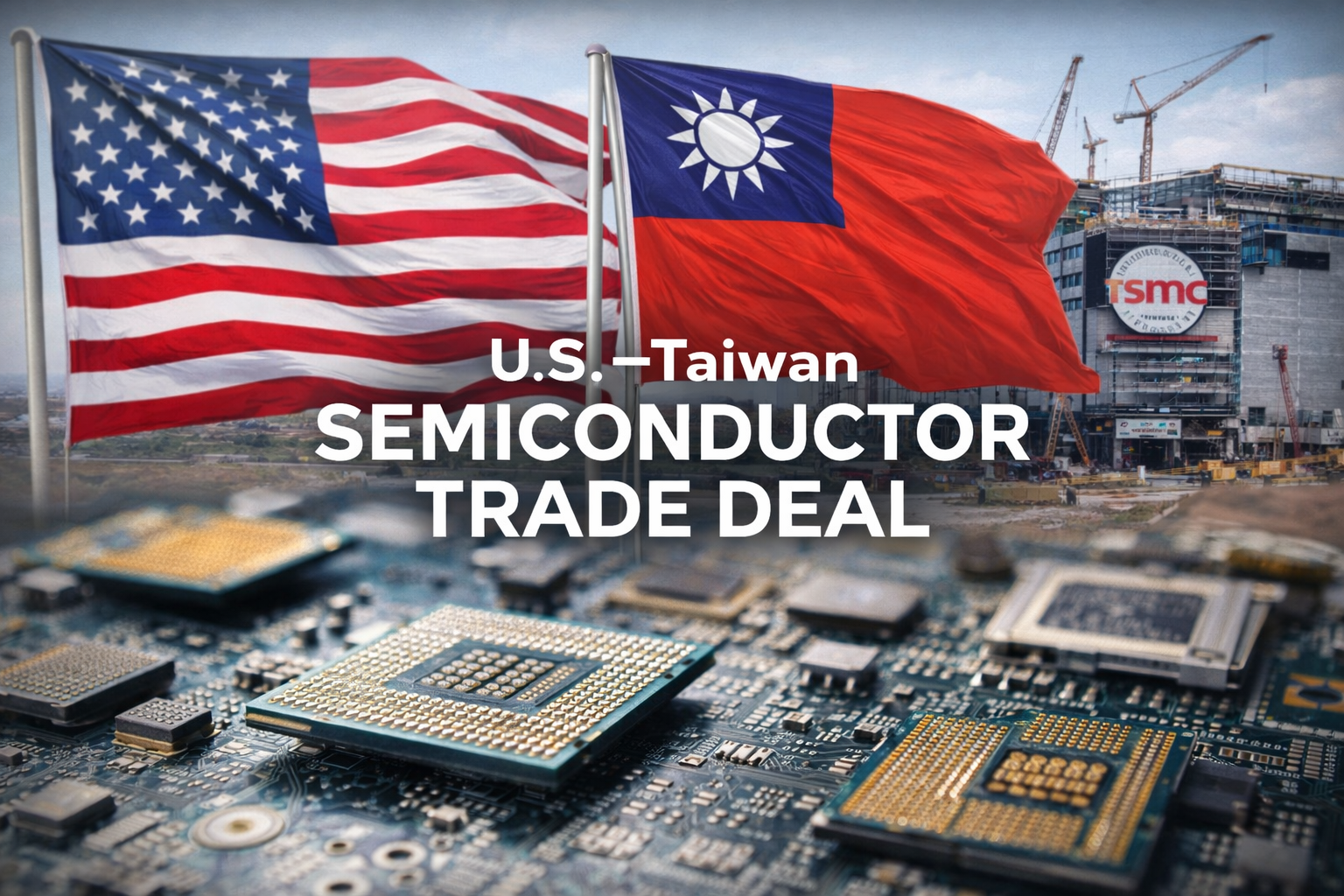
The United States and Taiwan finalized a landmark trade deal on Thursday. The agreement centers on semiconductors. It lowers tariffs and accelerates investment in U.S. technology.
As a result, Washington strengthens supply chains while Taipei secures market access. Meanwhile, the deal raises geopolitical stakes with China.
What the Trade Deal Changes
Under the agreement, the U.S. will reduce tariffs on most Taiwanese exports from 20% to 15%. In addition, it will set zero tariffs on select goods. These include generic drugs, aircraft components, and certain natural resources.
Crucially, chipmakers that expand U.S. production will receive lower import taxes on semiconductors. Therefore, the deal rewards onshore manufacturing.
TSMC Leads the Investment Push
TSMC anchors the agreement. The company committed $100 billion in 2025. Now, it plans more.
Overall, Taiwanese tech firms will invest at least $250 billion in U.S. semiconductors, energy, and AI. Moreover, Taiwan will guarantee another $250 billion in credit to support future projects.
In Arizona, TSMC is moving fast. CEO C.C. Wei said the firm is applying for permits for a fourth factory and its first advanced packaging plant. Consequently, U.S. chip capacity will rise sharply.
Tariff Relief Tied to New Capacity
The deal links tariff relief to construction milestones. During approved build periods, chipmakers can import up to 2.5 times their new U.S. capacity without extra tariffs. Firms with existing U.S. plants can import 1.5 times their added capacity.
At the same time, the administration imposed a 25% tariff on select AI chips. However, most other chips remain exempt for now.
Winners Across the Chip Supply Chain
The expansion benefits more than fabs. Equipment suppliers like ASML, Lam Research, and Applied Materials should see higher demand.
Likewise, materials suppliers will gain. These include Sumitomo Corp and Qnity Electronics. Many already operate in Arizona. Therefore, the local ecosystem will deepen.
Shares of Nvidia, a major TSMC customer, rose more than 2% after the news.
Strategic Impact and China Tensions
The deal tightens ties between Washington and Taipei. It does so as Beijing increases pressure on Taiwan. Consequently, the agreement carries diplomatic weight.
At the same time, many U.S. tariffs still face legal review. The Supreme Court may soon rule on the president’s authority to impose broad tariffs without Congress. That decision could affect future trade pacts.
What Comes Next
Taiwan’s parliament must review the deal. If approved, implementation will begin quickly. Investors will watch construction timelines, hiring plans, and permit approvals.
Meanwhile, U.S. policymakers aim to build durable tech clusters. Taiwan has offered expertise from its science-park model. However, labor shortages remain a risk.
Conclusion
The U.S.–Taiwan semiconductor deal marks a major shift. It cuts tariffs, mobilizes massive investment, and expands U.S. chipmaking. Above all, it strengthens supply-chain resilience.
Still, execution will matter. Permits, talent, and legal clarity will decide the outcome. For now, the agreement signals a clear bet on semiconductors as a strategic priority.