Key Highlights
- Venezuela will export 30–50 million barrels of crude oil to the United States
- Deal could be worth up to $2 billion at current prices
- Chevron remains the only U.S. firm authorized to export Venezuelan oil
- The agreement may help Venezuela avoid deeper production cuts
- U.S. Gulf Coast refiners expected to benefit from heavier crude supply
Introduction
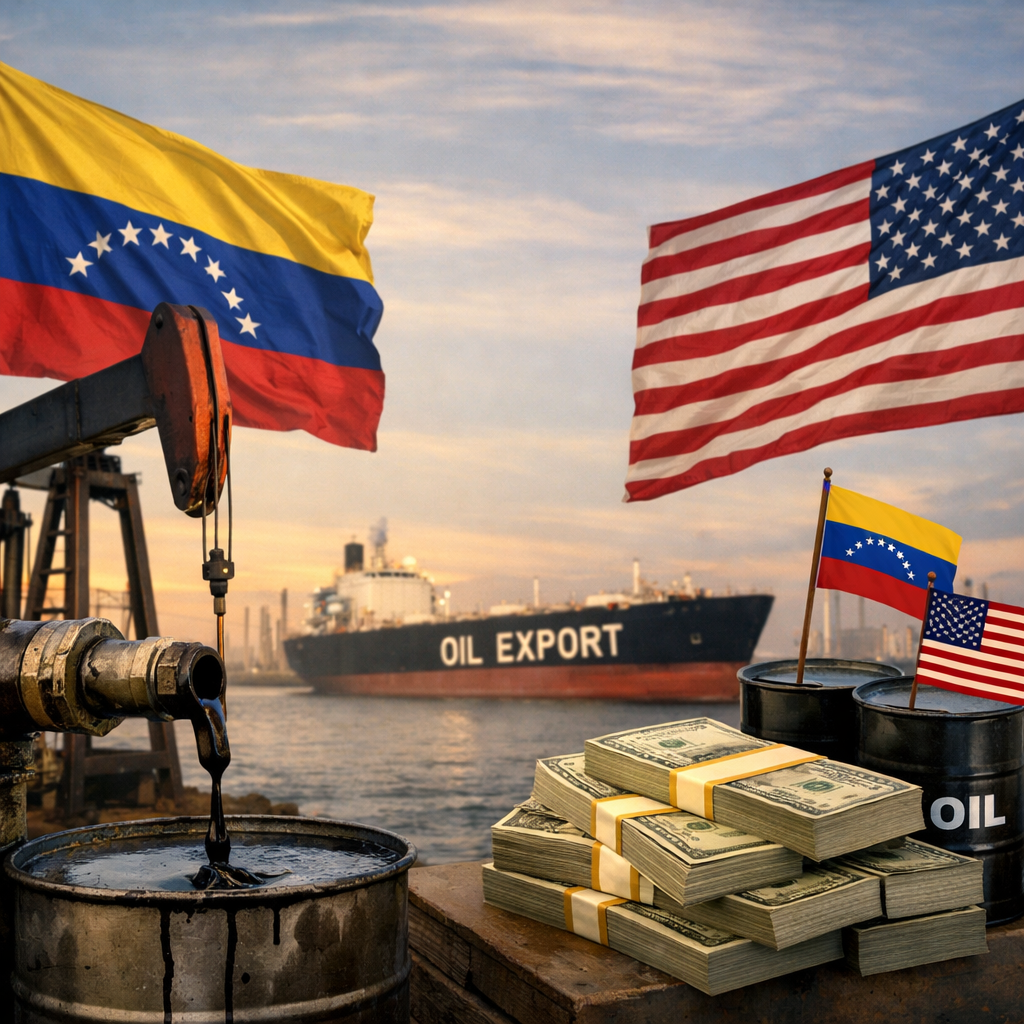
Venezuela and the United States have reached a high-stakes agreement that will allow Caracas to export up to $2 billion worth of crude oil to U.S. refineries, marking one of the most consequential energy deals between the two countries in years. The announcement, made by U.S. President Donald Trump, signals a major geopolitical shift that could reshape oil trade flows, reduce China’s access to Venezuelan crude, and stabilize Venezuela’s struggling oil production.
Details of the Venezuela – U.S. Oil Agreement
Under the deal, Venezuela will supply between 30 and 50 million barrels of sanctioned oil to the United States, according to Trump. The agreement is designed to ease pressure on Venezuelan storage capacity while preventing further production cuts by state oil company PDVSA.
Geopolitical Implications: Oil Shift Away From China
For more than a decade, China has been Venezuela’s largest oil customer, especially after U.S. sanctions intensified in 2020. This new agreement will redirect crude shipments originally bound for China to U.S. ports, reducing Beijing’s access to discounted Venezuelan oil.
The move is widely seen as part of a broader U.S. strategy to reassert influence over Venezuela’s vast energy reserves while limiting China’s foothold in Latin American energy markets.
Chevron’s Central Role in Venezuela Oil Exports
At present, Chevron is the only U.S. company authorized to export Venezuelan crude under a special license. The company has been shipping 100,000 to 150,000 barrels per day despite the broader blockade affecting other buyers.
Chevron’s joint ventures with PDVSA effectively place the company in control of Venezuelan oil flows to the U.S., making it a key beneficiary and gatekeeper of the renewed trade relationship.
Impact on Oil Prices and U.S. Refiners
Following the announcement, U.S. crude prices fell more than 1.5%, reflecting expectations of increased supply. Heavy crude differentials along the U.S. Gulf Coast also weakened, signaling that refiners are anticipating greater availability of Venezuelan barrels.
U.S. refineries are uniquely positioned to process Venezuela’s heavy oil grades. Before sanctions, Gulf Coast refiners were importing up to 500,000 barrels per day from Venezuela.
Political Tensions and Sanctions Context
The deal comes amid extraordinary political turmoil in Venezuela. U.S. forces recently captured Venezuelan President Nicolas Maduro, an action Caracas has labeled a kidnapping. Interim President Delcy Rodriguez, herself under U.S. sanctions, has not publicly commented on the agreement.
Sanctions still prevent PDVSA from accessing the global financial system. This raises questions about how much of the revenue Venezuela will ultimately control.
Possible Future Developments for Venezuela
According to sources, U.S. and Venezuelan officials have discussed:
- Auctions allowing U.S. buyers to bid for Venezuelan cargoes
- Expanded U.S. licenses for PDVSA partners
- Potential use of Venezuelan oil in the U.S. Strategic Petroleum Reserve
If implemented, these measures could further integrate Venezuelan crude into U.S. energy infrastructure while reshaping global heavy oil supply chains.
Conclusion
The agreement for Venezuela to export up to $2 billion in oil to the United States represents a turning point in U.S.–Venezuela relations and global energy geopolitics. By redirecting oil from China to U.S. refiners, the deal supports American energy security, stabilizes Venezuelan production, and places Chevron at the center of a reconfigured oil trade flow.
As implementation unfolds, markets will closely watch how sanctions, pricing, and political tensions shape the long-term impact of this landmark energy deal.