Key Highlights
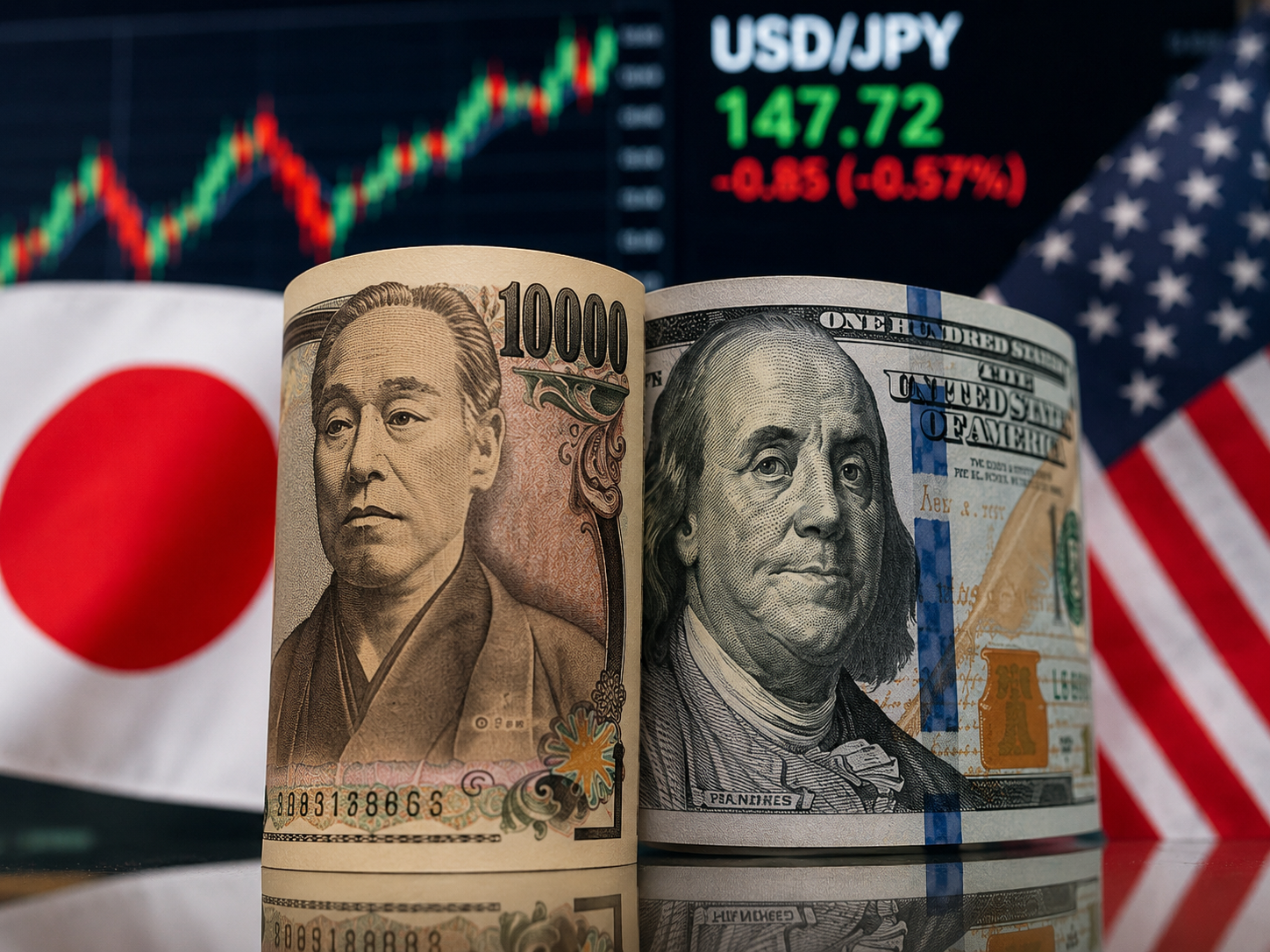
- United States and Japan jointly intervened to support the yen.
- The action marked their first coordinated currency intervention since 1998.
- The yen had fallen near a 40-year low against the U.S. dollar.
- Higher U.S. interest rates and low Japanese rates fueled large carry trades.
- A weaker yen has raised import costs for Japanese households and businesses.
- The intervention also seeks to reduce the risk of disorderly moves across global markets.
Introduction
United States and Japan have stepped into the foreign exchange market together to support the yen, marking their first coordinated intervention in nearly three decades. The move reflects growing concern that the currency’s prolonged decline could increase inflation in Japan, distort trade, and create wider instability if heavily leveraged currency trades unwind suddenly.
The intervention lifted the yen sharply against the dollar, but it does not eliminate the economic forces that pushed the currency toward a 40-year low. Investors will now watch whether official action can create a lasting change or merely slow the decline temporarily.
U.S. and Japan Launch Rare Yen Intervention
Joint intervention between the United States and Japan is highly unusual. The two countries last coordinated to support the yen in 1998, when the currency also faced severe downward pressure.
By acting together, Washington and Tokyo have sent a stronger message than Japan could deliver alone. Coordinated intervention carries greater credibility because it shows that both governments view excessive currency weakness as a shared economic and financial concern.
The move also signals that officials are willing to challenge speculative positioning when market conditions become disorderly.
Why the Yen Fell to a 40-Year Low
The main force behind the yen’s decline has been the large gap between U.S. and Japanese interest rates.
The Federal Reserve has maintained significantly higher rates, making dollar-denominated bonds and other assets more attractive to global investors. The Bank of Japan, meanwhile, has kept monetary conditions comparatively loose.
This difference encourages investors to sell yen and buy dollars or other higher-yielding currencies. As the strategy expands, additional selling puts even more pressure on the Japanese currency.
Carry Trades Intensified Yen Weakness
The interest-rate gap has fueled a major carry trade.
In a carry trade, investors borrow money in a low-interest-rate currency such as the yen and use it to buy assets that offer higher returns elsewhere. The strategy can generate steady profits while markets remain stable, but it also creates significant risks.
As more investors borrow and sell yen, the currency weakens further. If market conditions change suddenly, traders may rush to close their positions, potentially causing sharp moves across currencies, bonds, and stocks.
This possibility helps explain why the United States viewed yen weakness as more than a domestic Japanese problem.
Middle East Tensions Boosted Demand for the Dollar
Recent geopolitical tension has added another source of pressure.
During periods of uncertainty, investors often move money into the U.S. dollar, which they view as a relatively safe and liquid asset. Renewed instability in the Middle East increased demand for the dollar while weakening currencies such as the yen.
Although the yen has historically attracted safe-haven demand, the current interest-rate environment has weakened that role. Investors can now earn considerably higher returns by holding dollar assets.
Why the United States Supported the Intervention
Washington had several reasons to participate.
First, a rapidly falling yen could encourage even larger carry trades. If those positions unwind abruptly, the resulting volatility could spread through global financial markets.
Second, a weak yen makes Japanese goods cheaper relative to American products. That can increase pressure on U.S. manufacturers and widen trade imbalances.
Third, Japan may need to sell part of its large U.S. Treasury portfolio to raise dollars for intervention. Heavy Treasury selling could push American bond yields higher, increasing borrowing costs across the U.S. economy.
Supporting the yen therefore gives Washington a way to reduce several financial and economic risks at once.
Why Japan Needed a Stronger Yen
Japan faces more immediate consequences from currency weakness.
The country imports significant amounts of energy, food, and raw materials. A weaker yen makes those imports more expensive, raising costs for businesses and households.
Companies may pass higher import expenses on to consumers, increasing inflation and reducing purchasing power. Families then have less money available for discretionary spending, while businesses face pressure on profit margins.
A falling currency can also damage confidence. If investors believe authorities cannot stop the decline, they may increase their bets against the yen and accelerate the downward move.
Intervention Sends a Message to Currency Traders
The joint action is not only about buying yen. It also serves as a warning to investors who built large positions against the currency.
When two major governments intervene together, traders face greater uncertainty about how far officials may go and how much money they may deploy. That uncertainty can force some investors to reduce their short-yen positions.
This signaling effect can sometimes prove more powerful than the actual volume of currency purchased.
History Suggests Coordinated Action Can Work
Previous examples show that coordinated intervention can influence currency markets for extended periods.
The 1998 U.S.-Japan intervention helped stop a sharp yen decline. The 1985 Plaza Accord, which brought together the United States, Japan, West Germany, France, and the United Kingdom, contributed to a prolonged decline in the dollar.
These episodes demonstrate that intervention can succeed when several major governments share the same objective and reinforce the action with credible policy communication.
However, past success does not guarantee that the latest intervention will deliver the same result.
Interest-Rate Differences Remain the Central Problem
The biggest challenge is that intervention does not change the underlying rate gap.
As long as U.S. assets offer substantially higher yields than Japanese assets, investors will retain an incentive to borrow yen and move money abroad. Currency purchases can interrupt that process, but they cannot remove the economic motivation behind it.
For the yen to strengthen sustainably, markets may need to see a smaller difference between Federal Reserve and Bank of Japan policy.
That could happen if U.S. rates fall, Japanese rates rise, or both developments occur together.
What the Intervention Means for Investors
The action introduces more uncertainty into one of the world’s largest and most important currency trades.
Investors holding short-yen positions now face the risk of further government intervention. At the same time, traders who expect a lasting yen recovery must consider whether the rate differential still favors the dollar.
The intervention may also affect other markets. A stronger yen can pressure Japanese exporters, influence global bond yields, and trigger adjustments in portfolios funded through yen borrowing.
Any rapid reversal in the carry trade could create volatility across equities, credit markets, and emerging-market currencies.
What Happens Next
Markets will closely monitor the yen’s response over the coming weeks.
If the currency continues strengthening, officials may view the intervention as an early success. If it quickly resumes its decline, Japan and the United States could face pressure to act again.
Investors will also watch statements from the Federal Reserve, Bank of Japan, and finance ministries for signs of coordinated policy support.
Ultimately, the intervention’s durability will depend on whether monetary policy and economic fundamentals begin moving in the same direction as the official currency action.
Conclusion
The joint U.S.-Japan intervention marks a significant escalation in efforts to stop the yen from falling further. Japan wants relief from rising import costs and inflation, while the United States wants to limit financial instability, trade distortions, and pressure on Treasury markets.
The move has strengthened the yen and warned traders that officials will not tolerate uncontrolled depreciation. However, the wide gap between U.S. and Japanese interest rates remains unresolved.
Coordinated intervention may stop the immediate decline, but a lasting recovery will require deeper changes in the economic forces that continue to favor the dollar.