Key Highlights
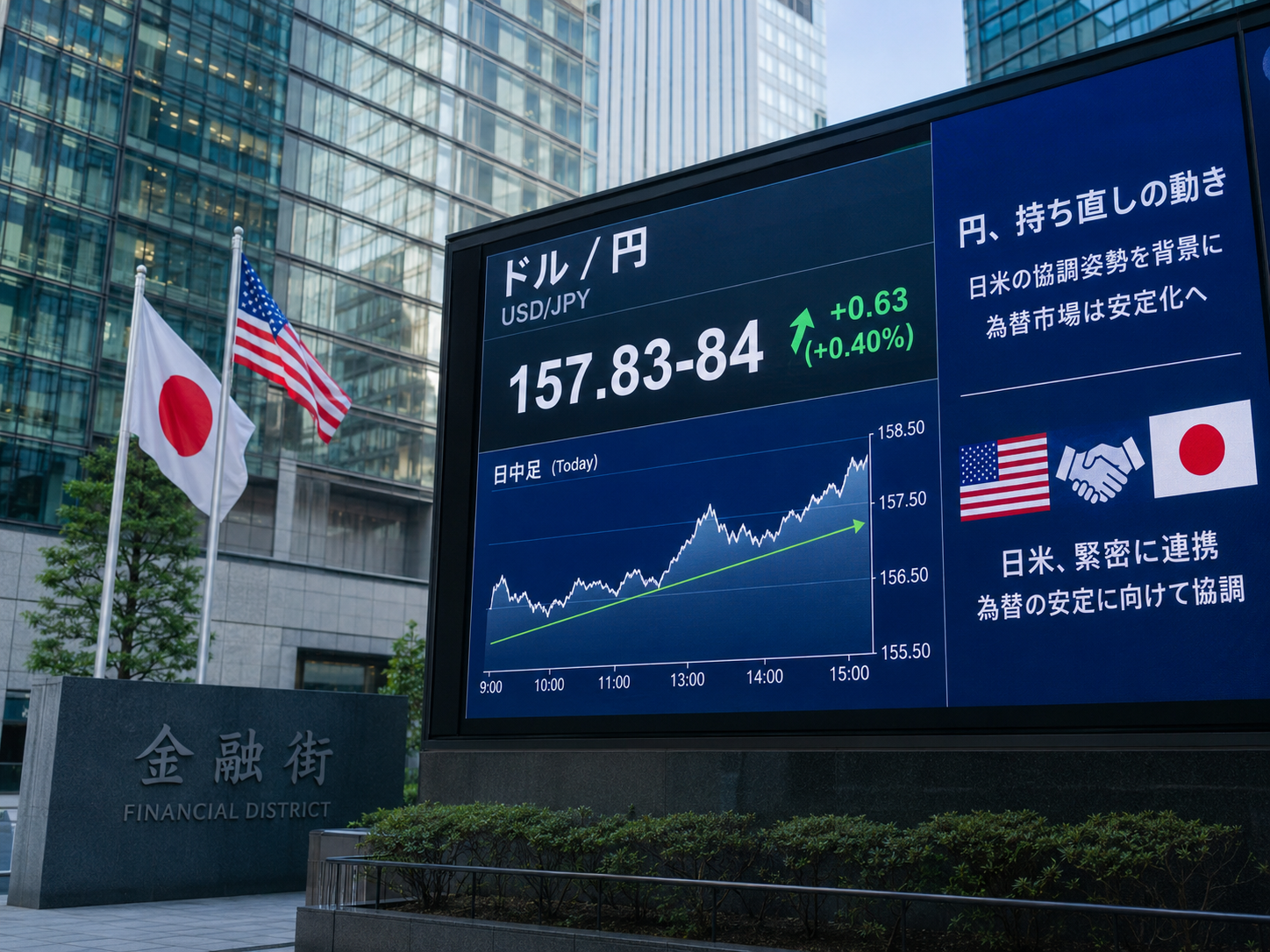
- US and Japan jointly bought yen to support the currency.
- The intervention followed a drop in the yen to a 40-year low.
- The move was the first U.S. intervention to support the yen since 1998.
- Washington sees yen stability as important for Asian financial markets.
- A weak yen can pressure other Asian currencies and affect U.S. trade goals.
- Japan may need higher interest rates to support a lasting recovery.
- Japan’s underlying fiscal and external position remains stronger than the yen’s weakness suggests.
Introduction
The coordinated action involved buying yen in an effort to curb excessive volatility and reduce the risk of further destabilizing moves across Asian markets.
Although currency intervention by major economies is rare, the latest move reflects concerns that the yen had weakened far beyond what Japan’s economic fundamentals appeared to justify.
U.S. and Japan Coordinate Rare Yen Intervention
The intervention marked the first time in decades that the United States directly supported the yen through coordinated currency purchases.
The U.S. Treasury has the legal authority to intervene in foreign exchange markets, but it has generally avoided doing so in recent years.
That makes the latest action especially significant.
By acting alongside Japan, Washington sent a stronger signal to currency traders that further disorderly weakness in the yen may not be tolerated.
Yen Falls to a 40-Year Low
The intervention came after the yen dropped to levels not seen in about four decades.
On an inflation-adjusted basis, the currency had weakened to levels comparable with those seen in the 1960s.
That decline looked increasingly disconnected from Japan’s current economic position.
Japan today is a far wealthier and more developed economy, with large external assets, a sizable current-account surplus and improving fiscal indicators.
The weakness of the currency therefore raised concerns that market momentum had pushed the yen beyond levels justified by fundamentals.
Why the United States Stepped In
The U.S. interest in supporting the yen goes beyond helping Japan.
A sharply weaker yen can affect currencies across Asia because regional economies compete with Japan in exports and investment.
If the yen falls too far, other Asian currencies may also come under pressure as governments try to preserve competitiveness.
That could complicate U.S. efforts to rebalance trade and encourage more investment in American manufacturing.
Weak Yen Can Work Against U.S. Reindustrialization Goals
A weaker yen makes Japanese goods cheaper in global markets.
That can encourage companies to invest more heavily in Japan and other export-oriented Asian economies rather than in the United States.
For an administration focused on expanding domestic manufacturing, that dynamic can become a strategic concern.
Currency movements therefore influence more than financial markets. They can also affect where companies build factories, allocate capital and organize supply chains.
Asian Currency Stability Matters
The yen plays an important role in regional financial markets.
A rapid decline can place pressure on currencies in South Korea, China and other Asian economies.
That creates the risk of competitive depreciation, where countries allow their currencies to weaken in order to protect export competitiveness.
Such a cycle could increase financial instability and make regional trade tensions worse.
Supporting the yen may therefore help reduce pressure on other Asian currencies.
Treasury Market Risks Also Matter
The intervention may also reflect concern about U.S. Treasury bonds.
Japan holds a large stock of foreign assets, including significant holdings of U.S. government debt.
If Japan needed to raise dollars aggressively to defend the yen, it could potentially sell Treasury securities.
Large-scale selling could push U.S. bond yields higher.
That would increase borrowing costs for the U.S. government, businesses and households.
For Washington, supporting the yen may therefore reduce the risk that Japan needs to liquidate large amounts of dollar assets.
Japan’s Economy Is Stronger Than the Currency Suggests
Despite the yen’s weakness, Japan retains several important economic strengths.
The country runs a substantial current-account surplus, meaning it earns more from trade and overseas investments than it pays out.
Japan also owns significant foreign assets.
At the same time, government debt measures have improved relative to the size of the economy, while the headline fiscal deficit has narrowed.
These factors suggest that the yen’s extreme weakness may reflect market positioning and interest-rate differences more than deep structural weakness.
Bank of Japan Rates Remain a Core Issue
The biggest challenge for the yen is monetary policy.
Japanese interest rates remain well below U.S. rates and, importantly, below Japan’s own inflation rate.
That makes yen-denominated assets relatively unattractive to investors.
As long as the interest-rate gap remains wide, market participants have an incentive to borrow in yen and invest in higher-yielding assets abroad.
That dynamic continues to put downward pressure on the currency.
Higher Japanese Rates Could Support the Yen
A more durable yen recovery may require the Bank of Japan to raise policy rates further.
Higher rates would make Japanese assets more attractive and reduce the incentive for investors to fund global trades with cheap yen.
A series of rate increases could also reinforce the credibility of future intervention.
Currency purchases can influence market psychology, but monetary policy is usually more important over the long term.
Carry Trades Have Added Pressure
The yen has been widely used as a funding currency for carry trades.
Investors borrow in yen at low rates and use the proceeds to buy higher-yielding assets elsewhere.
This strategy works while the yen remains weak or stable.
But if investors begin to expect the yen to strengthen, they may rush to close those positions.
That could create rapid upward pressure on the currency.
Intervention Can Change Market Expectations
One of the most important effects of intervention is psychological.
Governments do not necessarily need to dominate the entire foreign exchange market.
They need to convince traders that betting against the currency has become more dangerous.
A credible threat of repeated intervention can force investors to reduce short-yen positions.
That alone can help stabilize the market.
Japanese Investors Could Also Support the Currency
Japanese institutions and households hold large foreign asset portfolios.
Many of those investments are not fully hedged against currency movements.
If investors become more concerned about yen appreciation, they may increase their hedging activity.
That would require buying yen and could provide strong underlying support for the currency.
A shift in investor behavior could therefore reinforce the impact of government intervention.
Why This Intervention Is So Unusual
The United States has rarely used direct currency intervention in recent decades.
The last major coordinated U.S. action to support the yen occurred in 1998 during the Asian financial crisis.
In 2011, Washington also participated in an intervention involving the yen, but that operation had the opposite goal: preventing the currency from strengthening too much after the Fukushima disaster.
The latest move is therefore highly unusual because it directly targets excessive yen weakness.
What Investors Should Watch Next
Markets will closely monitor several factors.
The first is whether the yen can hold onto its gains after the intervention.
The second is whether the Bank of Japan signals additional interest-rate increases.
Investors will also watch U.S. monetary policy, because any decline in American rates would narrow the gap between the two countries.
Finally, markets will monitor whether Japan intervenes again if the yen resumes its decline.
What Could Make the Intervention Fail
Intervention alone may not be enough if underlying market forces remain unchanged.
If U.S. interest rates stay high and Japanese rates remain low, traders may eventually return to selling the yen.
A renewed rise in global risk aversion could also strengthen the dollar.
That means policymakers may need to combine intervention with monetary policy adjustments and clearer communication.
Why the Yen Matters Beyond Japan
The yen is one of the world’s most important currencies.
Its value affects trade, capital flows, global bond markets and investment decisions throughout Asia.
A disorderly decline can therefore create consequences far beyond Japan’s borders.
That explains why Washington viewed the latest weakness as a broader financial stability issue rather than simply a Japanese domestic problem.
Conclusion
The coordinated U.S.-Japan intervention represents an unusually strong response to the yen’s decline to a 40-year low.
The operation aims to stabilize Asian markets, reduce pressure on other regional currencies and prevent wider financial risks.
Japan’s economy still has significant underlying strengths, but the currency’s future will depend heavily on interest rates and investor behavior.
If the Bank of Japan raises rates and investors begin hedging more of their foreign assets, the yen could receive lasting support.
For now, the intervention has sent a clear message: both Washington and Tokyo are prepared to act when currency weakness threatens broader economic and financial stability.