Key Highlights
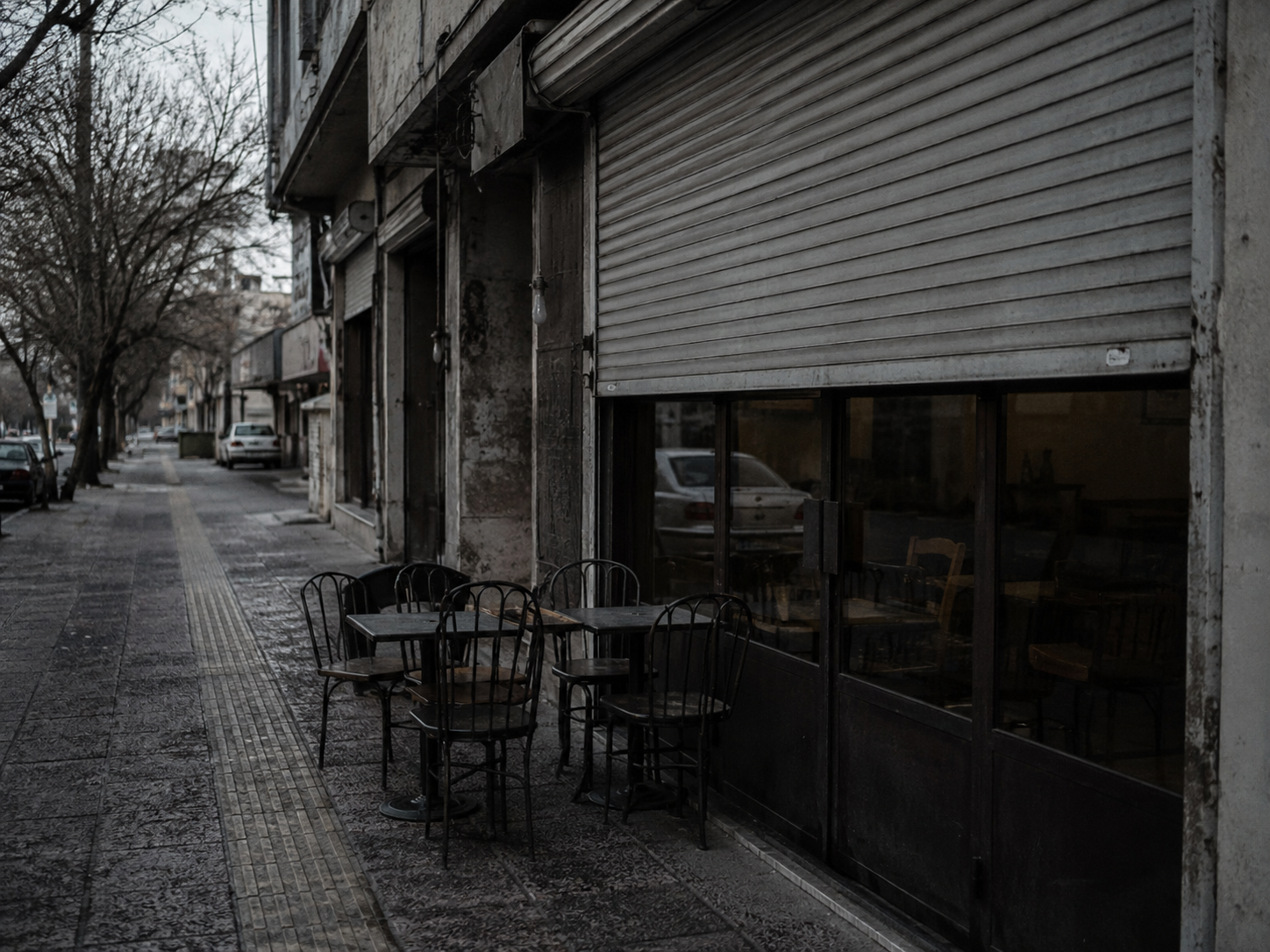
- Authorities have recently closed cafes in Mashhad, Bojnourd, and Birjand.
- Mandatory hijab enforcement has been cited in some cases.
- Other closures have been attributed to licensing, pricing, administrative, and health-related violations.
- Several well-known cafes and restaurants in Tehran have also been shut.
- Women’s sports clubs and other public venues have faced similar enforcement.
- Business owners and officials have offered differing accounts of why some venues were targeted.
- The closures come as many small businesses already face economic pressure, lower consumer spending, and operational uncertainty.
Introduction
Iran is seeing a widening wave of business closures as authorities increase enforcement against cafes, restaurants, sports clubs, and other commercial venues. Recent cases in Mashhad, Bojnourd, Birjand, Tehran, Yazd, and other cities have involved a mix of compulsory hijab rules, licensing requirements, administrative violations, pricing issues, and health regulations.
The closures are drawing attention because they affect more than individual businesses. Cafes and similar venues have become important social spaces for younger urban Iranians, while small businesses are already struggling with weak purchasing power, inflation, and broader economic instability.
Cafes Closed in Mashhad, Bojnourd, and Birjand
Three recent closures have highlighted the renewed enforcement campaign.
In Bojnourd, the Arkia cafe-restaurant was also shut, although no official explanation was publicly provided in the material shared.
In Birjand, a cafe was closed under an order from the local public and revolutionary prosecutor for alleged non-compliance with compulsory hijab requirements.
These cases show that the current enforcement wave includes both morality-related rules and more traditional business regulations.
Mandatory Hijab Rules Remain a Major Factor
Compulsory hijab requirements continue to play a central role in some business closures.
Authorities have increasingly held commercial establishments responsible for the conduct and dress of customers, placing pressure on owners and managers to enforce rules inside privately operated venues.
This creates a difficult position for businesses. Owners may face penalties or closure if authorities determine that customers are not complying with mandatory dress regulations.
For cafes and restaurants, this adds a layer of operational risk that goes beyond food safety, licensing, taxes, or employment rules.
Tehran Cafes and Restaurants Also Face Closures
Several well-known cafes and restaurants in central Tehran have reportedly been forced to cease operations in recent weeks.
The affected establishments include venues along Sanai and Iranshahr streets, with images of sealed entrances and police tape circulating widely on social media.
Some of the businesses identified in reports include Joe Cafe, 1401, Sam Cafe, Deux Bars, Nook, Cafe Maan, and Theory.
The closures have strengthened perceptions that enforcement is becoming broader and more coordinated across major urban centers.
Officials and Business Owners Offer Different Explanations
One of the most important aspects of the current situation is the disagreement over why some businesses are being shut.
Officials have sometimes attributed closures to licensing, administrative, pricing, or public-health violations. Business owners and other observers, however, have in some cases argued that compulsory hijab enforcement or the atmosphere inside the venues played a larger role.
These competing accounts make it difficult to establish a single explanation for every case.
What is clear is that many businesses are facing closer scrutiny from multiple agencies at the same time.
Women’s Sports Clubs Have Also Been Targeted
The enforcement campaign is not limited to cafes and restaurants.
Four women’s sports clubs in Yazd were sealed in early August after inspections by public places police and representatives from the Ministry of Sport and Youth.
Authorities described the reasons as administrative violations and said the inspections took place under judicial authorization.
The action suggests that enforcement is extending across a wider range of social and commercial spaces, especially those associated with women’s activities and public interaction.
Closures Have Spread Across Multiple Iranian Cities
The pattern extends beyond Tehran and the most recent cases.
Authorities have previously closed cafes, teahouses, hotels, restaurants, and other venues in cities including Kashan, Dehdasht, Behbahan, Lorestan, Ardabil, and Aran va Bidgol.
Alleged violations have included failure to enforce compulsory hijab, failure to observe religious standards, music-related complaints, licensing problems, and other administrative issues.
The geographic spread of the closures indicates that the issue is national rather than isolated to a few municipalities.
Cafes Have Become Important Social Spaces
The crackdown has attracted particular attention because cafes play an important cultural role in many Iranian cities.
For younger Iranians, cafes often function as meeting places, workspaces, and social venues that offer a degree of personal freedom not always available in more formal public environments.
That cultural role makes them more than ordinary retail businesses. Their closure can affect local social life and intensify tensions between authorities and urban communities.
Businesses Face Economic Pressure Beyond Enforcement
The closures come at a difficult time for Iran’s small-business sector.
Many cafes and restaurants are already dealing with inflation, weak consumer spending, rising operating costs, currency instability, and declining purchasing power.
Internet disruptions and broader economic uncertainty have also hurt customer traffic and digital commerce.
For a business already operating on thin margins, even a short closure can create serious financial problems. Employees may lose wages, while owners still face rent, taxes, supplier payments, and debt obligations.
Sudden Closures Can Threaten Jobs
The economic impact extends to workers.
Cafe employees, restaurant staff, cleaners, delivery workers, suppliers, and other service-sector employees can lose income immediately when a venue is sealed.
Many of these workers have limited financial reserves. A prolonged shutdown can therefore create hardship quickly, especially in an economy already struggling with high living costs.
The wider the enforcement campaign becomes, the greater the potential impact on urban employment and small-business stability.
Enforcement Appears to Be Intensifying
The latest cases suggest that authorities are applying closer scrutiny to public spaces and commercial establishments.
The pattern includes inspections, judicial orders, police enforcement, and administrative action.
Some reports link the renewed pressure directly to compulsory hijab enforcement, while others involve broader regulatory violations.
Together, these developments point to a more restrictive operating environment for businesses that depend on public-facing spaces.
What Happens Next
Business owners will likely be watching for clearer enforcement standards and more consistent explanations for closures.
Regulatory uncertainty is especially difficult for small businesses because owners may not know which rules will trigger inspections or how long closures will last.
If enforcement continues expanding, the issue could become both an economic and social concern.
The main questions now are whether authorities will maintain the current pace of closures, whether businesses will receive clearer compliance guidelines, and how much economic damage the campaign could create.
Conclusion
Iran’s latest wave of cafe and business closures reflects a broader tightening of controls over commercial and public spaces. Some venues have been shut over alleged compulsory hijab violations, while others face accusations involving licensing, pricing, health, or administrative requirements.
The closures are affecting cities across the country and come at a time when many small businesses are already under severe economic pressure.
As authorities increase enforcement, the situation is becoming an important test of how regulatory, social, and economic pressures interact in Iran’s urban business environment.